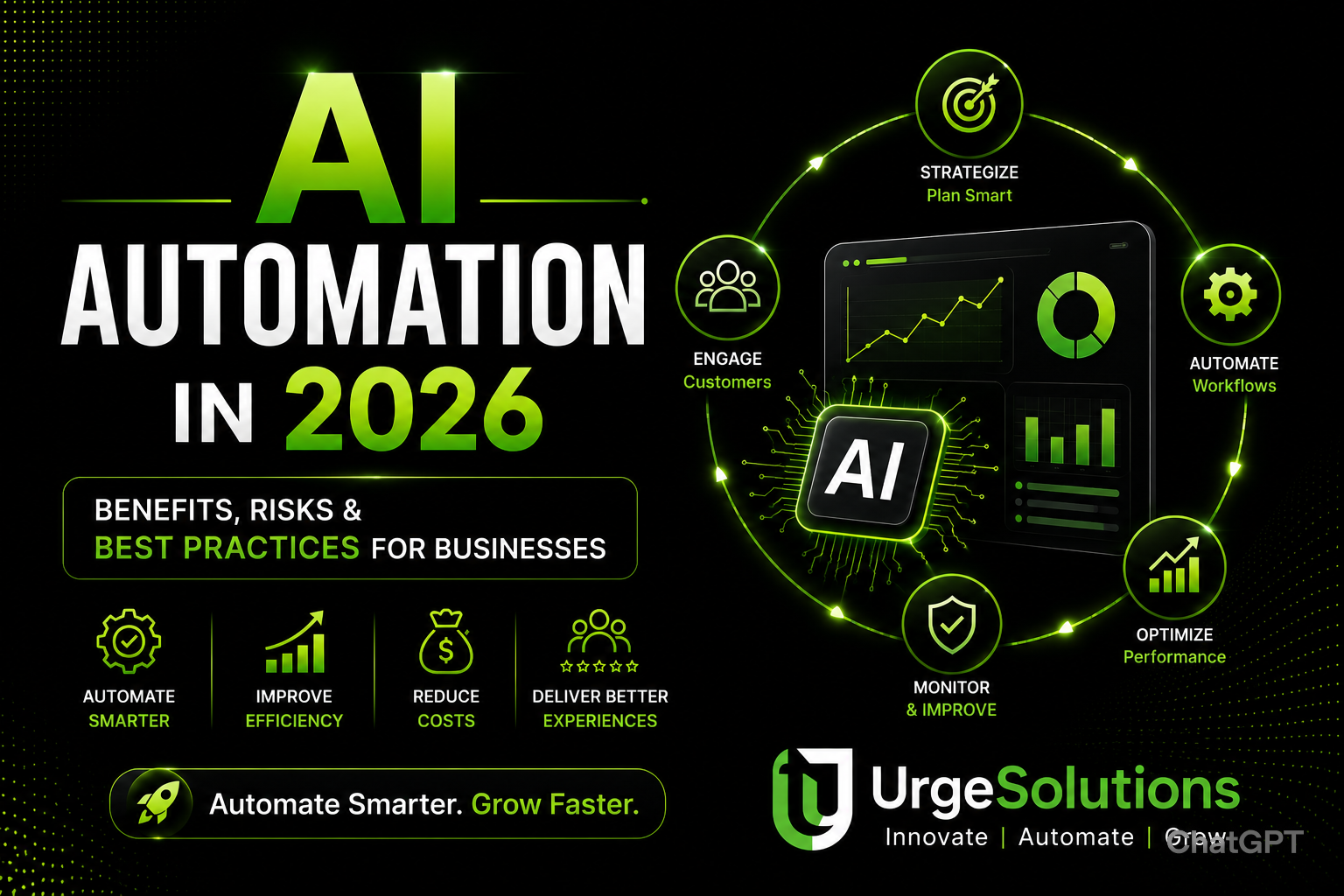
Artificial Intelligence (AI) is transforming the way businesses operate. From customer support and lead management to data analysis and workflow automation, AI is helping companies save time, reduce costs, and improve productivity.
However, as more organizations rush to adopt AI automation, many are discovering that implementing AI without a proper strategy can create new challenges instead of solving existing problems.
In this article, we’ll explore the benefits of AI automation, the potential drawbacks businesses should consider, and how to implement AI successfully without putting customer experience or business operations at risk.
What Is AI Automation?
AI automation combines artificial intelligence with automated workflows to perform tasks that traditionally required human intervention.
Examples include:
- AI-powered customer support chatbots
- Automated lead qualification systems
- Email response automation
- Data entry and processing
- Appointment scheduling
- Marketing campaign automation
- AI content generation
- Business workflow automation
When implemented correctly, AI can significantly improve operational efficiency while allowing teams to focus on higher-value activities.
The Benefits of AI Automation
1. Increased Productivity
AI can perform repetitive tasks much faster than humans. This allows employees to spend more time on strategic and creative work rather than administrative tasks.
2. Faster Customer Response Times
Modern customers expect immediate responses. AI-powered chatbots and automated support systems can engage visitors instantly, improving customer satisfaction and reducing response delays.
3. Reduced Operational Costs
Businesses can automate routine processes that would otherwise require significant manpower. This can lower operational expenses while maintaining service quality.
4. Better Lead Management
AI systems can capture, organize, and qualify leads automatically, ensuring that potential customers receive timely follow-ups and reducing the chances of missed opportunities.
5. 24/7 Availability
Unlike human teams, AI systems can operate around the clock, helping businesses support customers and process requests even outside regular working hours.
The Hidden Drawbacks of AI Automation
While the advantages are impressive, AI automation is not without risks.
Businesses that adopt AI without proper planning often face unexpected challenges.
1. Incorrect or Misleading Responses
AI systems are not perfect.
They can occasionally generate inaccurate information, misunderstand customer requests, or provide responses that do not align with company policies.
In industries such as healthcare, legal services, or finance, inaccurate information can lead to serious consequences.
2. Loss of Human Touch
Customers often appreciate personalized interactions.
Over-automating customer communications can make interactions feel robotic and impersonal, potentially damaging customer relationships.
Not every conversation should be handled by AI.
Complex situations still require human judgment and empathy.
3. Security and Privacy Concerns
AI systems often process sensitive business and customer data.
Without proper safeguards, businesses may expose confidential information or create compliance risks.
Data security should always be a priority when implementing AI solutions.
4. Poorly Designed Workflows
Many businesses deploy AI tools without fully understanding their existing processes.
As a result, automation may actually amplify inefficiencies instead of eliminating them.
A broken process automated by AI remains a broken process.
5. Dependence on Technology
Overreliance on AI can create operational vulnerabilities.
System failures, software issues, or inaccurate outputs may disrupt business operations if adequate human oversight is not maintained.
6. Hidden Costs
Although AI can reduce long-term costs, businesses often underestimate implementation expenses, integration requirements, staff training, and ongoing maintenance.
A successful AI project requires investment beyond the software subscription itself.
Common AI Automation Mistakes Businesses Make
Many organizations encounter problems because they:
- Automate everything at once
- Ignore employee training
- Fail to monitor AI performance
- Implement AI without clear goals
- Neglect data quality
- Remove human oversight entirely
- Focus on technology instead of business outcomes
These mistakes can reduce customer satisfaction and limit the return on investment.
How to Implement AI Automation Successfully
Start Small
Begin with one process that delivers measurable value, such as lead capture, appointment scheduling, or customer support automation.
Maintain Human Oversight
AI should assist employees, not completely replace them.
Ensure humans remain involved in reviewing critical decisions and handling complex customer interactions.
Focus on Customer Experience
Every automation should improve the customer journey.
If automation creates frustration, it may be doing more harm than good.
Monitor and Improve Continuously
AI systems require ongoing monitoring and optimization.
Regular reviews help identify errors, improve performance, and ensure workflows remain aligned with business objectives.
Choose the Right Technology Partner
Working with experienced automation specialists helps businesses avoid common pitfalls and develop solutions tailored to their specific needs.
The Future of AI Automation
AI automation is expected to become an essential part of modern business operations.
Organizations that implement AI strategically will benefit from improved efficiency, better customer experiences, and stronger competitive advantages.
However, success depends on balancing automation with human expertise.
The businesses that thrive will not be those that automate everything. They will be the ones that automate intelligently.
Final Thoughts
AI automation offers enormous opportunities for businesses looking to improve productivity, reduce costs, and deliver better customer experiences.
Yet, successful implementation requires careful planning, ongoing oversight, and a clear understanding of both the benefits and the risks.
Instead of viewing AI as a replacement for people, businesses should see it as a powerful tool that supports employees and enhances business operations.
When implemented thoughtfully, AI automation can become one of the most valuable investments a company makes in 2026 and beyond.
Need Help with AI Automation?
At UrgeSolutions, we help businesses design and implement AI-powered workflows that improve efficiency without sacrificing quality, security, or customer trust.
Whether you’re exploring AI for lead generation, customer support, workflow automation, or business process optimization, our team can help you develop a strategy that delivers real results.
contact us here Contact Us
📧 info@urgesolutions.com
📱 WhatsApp: +92 321 5544383



I appreciate the practical information shared here.
Thanks for sharing these useful tips.